

Introduction: The Center of Your Systemic Vitality
Many of our clients come to us feeling deeply stuck, not just mentally, but physically. They describe a constant state of discomfort, a “heavy” feeling in their midsection, and a persistent, frustrating struggle with chronic bloating that doesn’t seem to respond to dietary changes alone. These symptoms are not isolated digestive issues. They are your body’s sophisticated way of signaling that your autonomic nervous system is overwhelmed and struggling to find balance.
When your body is trapped in a state of chronic, modern-day stress, it naturally deprioritizes non-essential survival functions. Chief among these is digestion. This physiological shutdown often manifests as what many call “hormonal belly,” persistent low-grade systemic inflammation, or structural digestive stagnation.
At Blu Wellbeing, we view the abdomen as the physical and energetic center of your vitality. A specialized visceral massage is not a simple, surface-level relaxation treatment. It is a targeted, clinical manual therapy designed to encourage the deep visceral tissues to release stored tension, improve local blood circulation, and return your body to a state of natural homeostasis.
There are so little, but research on abdominal and visceral massage suggests it may be helpful for people experiencing constipation, bloating, and abdominal discomfort. Clinical studies and reviews have shown that gentle manual therapy can support bowel movement frequency, reduce stool retention, and improve comfort in people with functional digestive concerns. While results vary from person to person, the research supports massage as a complementary wellness practice rather than a replacement for medical care.
The Enteric Nervous System: Your “Second Brain”
To understand why a clinical visceral massage is so transformative, we must examine the complex relationship between your gut and your emotional state. Tucked deep within the walls of your digestive tract lies the Enteric Nervous System (ENS). This vast network of over 100 million neurons is so complex and independent that neuroscientists refer to it as our “second brain.”
The gut-brain axis is an active area of research, and studies continue to show that stress can affect digestion, motility, and gut sensitivity. When the nervous system remains in a heightened stress state, digestion may slow down and symptoms such as cramping, bloating, and irregular bowel movements can become more noticeable. Gentle bodywork may help support relaxation, which is one reason many clients report feeling relief after abdominal-focused massage.
The ENS communicates bidirectionally with your central nervous system via the vagus nerve. According to Johns Hopkins Medicine, this brain-gut connection plays a direct role in your mood, immune responses, and systemic wellness. In fact, approximately 90% of your body’s serotonin (neurotransmitter responsible for feelings of happiness, calm, and emotional stability) is produced directly within the gut.
When you experience mental stress, the nervous system constricts the smooth muscles of your digestive organs. This physical constriction acts as a literal bottleneck, impairing blood flow and slowing down chemical signaling. By applying targeted, gentle manual pressure through visceral massage, we physically encourage these constricted tissues to soften and open. This mechanical release:
- Accelerates the production and systemic distribution of vital neurotransmitters.
- Stimulates parasympathetic vagal activity to instantly quieten the “fight-or-flight” response.
- Restores healthy bidirectional communication along the gut-brain axis, promoting natural gut healing.
The Biomechanics of Bloating: Improving Transit Time
Persistent, painful bloating is often the direct result of sluggish motility, meaning food and gas are moving too slowly through your digestive tract. When waste matter remains stagnant in the large intestine, it undergoes excess fermentation, producing the uncomfortable gas pockets that leave you feeling swollen and inflamed.
Studies on abdominal massage, especially in people with constipation, suggest that manual stimulation may help improve intestinal transit time and reduce bloating-related discomfort. Researchers have found that regular abdominal or visceral massage may support bowel regularity, ease abdominal pressure, and improve quality of life for people dealing with sluggish digestion. These benefits are believed to come from a combination of mechanical stimulation, relaxation of abdominal tension, and improved parasympathetic activity.
A specialized visceral massage acts as a gentle, physical catalyst for peristalsis, the wave-like muscular contractions that naturally move waste through your colon.
A comprehensive clinical study published in the National Institutes of Health (NIH) database demonstrated that consistent abdominal or manual visceral massage therapy significantly decreases gastrointestinal transit time, reduces severe abdominal pain, and provides measurable relief for chronic constipation.

By working in the natural direction of your ascending, transverse, and descending colon, your therapist manually guides trapped gas and stagnant waste toward elimination. This targeted physical mobilization:
- Stimulates lymphatic drainage in the deep mesenteric lymph nodes to clear fluid retention.
- Relieves manual pressure on the major abdominal blood vessels, instantly boosting oxygen delivery to the tissues.
- Soothes localized smooth muscle spasms, providing relief from cramping and the physical sensation of tightness.
Hormonal Harmony: Pelvic Congestion, PCOS, and Endometriosis
For those navigating complex hormonal transitions, such as severe PMS, Polycystic Ovary Syndrome (PCOS), or endometriosis, the pelvic basin can easily become a site of chronic vascular congestion and structural restriction. When pelvic blood flow is restricted, ovaries may receive fewer hormonal messengers, and the metabolic clearing of used hormones becomes sluggish.
An intentional visceral massage works directly to relieve this pelvic congestion. By gently mobilizing the deep visceral ligaments that anchor the ovaries and uterus, a skilled practitioner helps to release restrictive tissue binds.
Clinical studies on pelvic manual therapy an visceral massages have confirmed that targeted tissue may work significantly increases localized pelvic circulation and supports the lymphatic clearing of metabolic waste. For our clients seeking specialized massage therapy services in Montreal, this means supporting your endocrine system’s natural self-regulation.
When pelvic circulation is optimized, the body is better equipped to:
- Regulate Estrogen Dominance: Promoting healthy liver and bowel function, which is essential for safely breaking down and eliminating excess estrogen.
- Encourage Follicular Health: Delivering nutrient-dense, oxygenated blood directly to the ovaries to support follicle development.
- Soften Scar Tissue: Gently minimizing the physical pull of endometrial adhesions that often cause intense, cyclical pain.
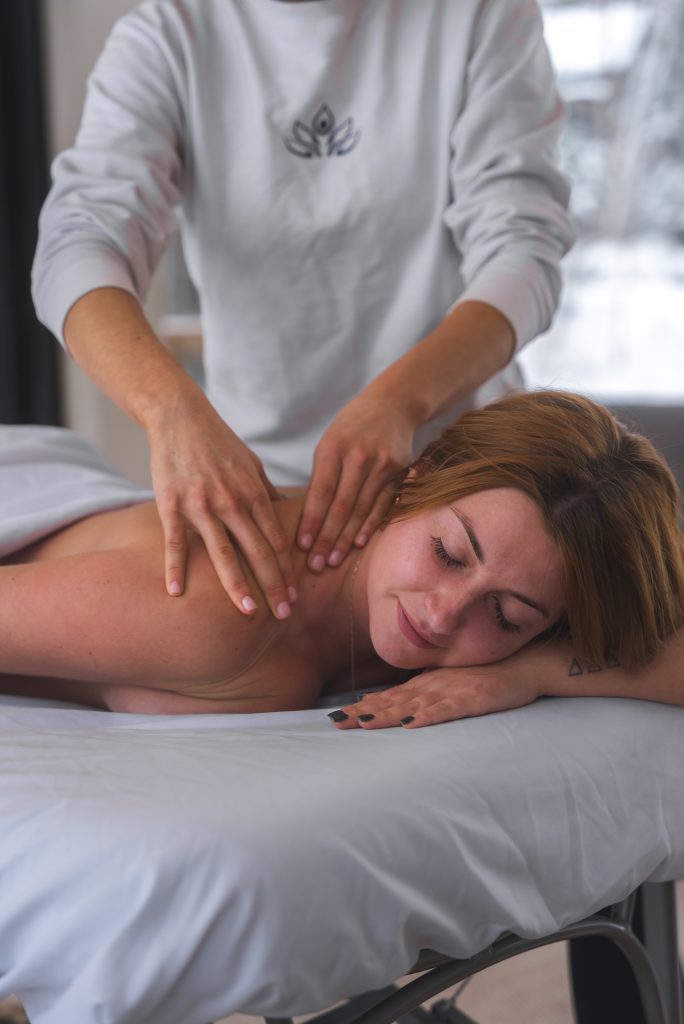
Cortisol and the “Survival Mode” Digestive Shut-Down
Your body’s endocrine response to stress is highly coordinated. Under high-pressure conditions, your adrenal glands release high levels of cortisol. Cortisol is designed to prepare you for physical exertion (running from danger) by temporarily shutting down “non-critical” systems like digestion and cellular repair.
Massage therapy research has also found links between touch therapy and reduced stress markers, including lower perceived anxiety and improved relaxation response. Because the digestive system is highly sensitive to stress, supporting the body’s relaxation response may indirectly improve digestive comfort. This is one reason abdominal massage or visceral massage therapy is often included in broader wellness routines focused on stress management and nervous system regulation.
However, in our modern, fast-paced environment, many individuals suffer from chronic, low-grade cortisol elevation. Your brain cannot tell the difference between a high-stakes professional deadline and a physical threat to your life. As long as your cortisol levels remain high, your stomach secretes less hydrochloric acid, your pancreas produces fewer digestive enzymes, and your intestinal lining becomes more permeable.
Research published in the Journal of Bodywork and Movement Therapies shows that consistent, focused manual touch may drop systemic salivary cortisol levels by more than 30%. By utilizing visceral massage to interrupt this stress cycle, you send a direct signal of safety to your hypothalamus-pituitary-adrenal (HPA) axis.
This drop in cortisol allows your intestinal wall to enter a state of active cellular repair, laying the perfect physiological foundation for deep, permanent gut healing.
A Step-by-Step Guide to Support Fertility and Digestion Self-Massage
While receiving clinical care at our premium Montreal Massage Spa is the gold standard for visceral mobilization, we believe that true, sustainable health is built on what you do between appointments. Empowering yourself with a daily self massage routine is one of the most proactive steps you can take for your digestive and hormonal health.
To help you integrate this practice at home, we have curated a specialized set of online self-care rituals for abdominal massage healing. Below is an introductory, step-by-step guide to get you started with your DIY visceral massage:
1. Set the Sanctuary
Find a quiet, warm space where you will not be disturbed. Lie down comfortably on your back with your knees slightly bent to relax your abdominal wall muscles. You may place a pillow under your knees for extra comfort. Use a small amount of warm organic oil, such as jojoba or sweet almond, to allow your hands to glide smoothly.
2. Connect with Your Breath
Before touching your abdomen, place your hands gently over your lower ribs. Take three slow, deep diaphragmatic breaths. Inhale deeply through your nose, letting your belly expand like a balloon, and exhale slowly through your mouth, feeling your abdomen naturally soften.
3. The “I Love U” Motility Routine
This gentle, circular sequence follows the natural path of your colon to assist waste and gas elimination:
- The Descending Colon (The “I”): Start on the left side of your abdomen, just below your ribs. Using the flat pads of your fingers, apply gentle, circular pressure as you stroke downward toward your left hip bone. Repeat this stroke 5 to 10 times to clear the final pathway.
- The Transverse to Descending Colon (The “L”): Move your fingers to the right side of your upper abdomen, just below the ribs. Sweep straight across to the left side, and then stroke downward toward your left hip bone (forming an upside-down “L”). Repeat 5 to 10 times.
- The Ascending to Descending Colon (The “U”): Start at your right lower hip bone. Stroke straight upward to your right ribs, sweep across to your left ribs, and stroke downward to your left hip bone (forming an upside-down “U”). Repeat 5 to 10 times.
4. Visceral Softening (The Solar Plexus)
Using flat hands, make slow, clockwise circles around your navel, gradually expanding your circles outward to cover the entire abdominal cavity. If you encounter an area that feels particularly tender or tight, hold your hands statically over that spot and breathe deeply into it, letting the warmth of your hands soothe the underlying tissue.

Why One Session is Just the Beginning: The Power of Cumulative Care
A single visceral massage may provide instant support, welcome relief from a “heavy” or bloated feeling, helping you feel lighter and more comfortable in your body within an hour. However, the true, lasting transformation of your endocrine and digestive systems happens when you treat the abdomen as part of a long-term, structured wellness ecosystem.
Your tissues have memory. If your nervous system has been running on high-alert for months or years, your body will naturally try to return to its high-tension, guarded baseline within 48 to 72 hours of a single treatment.
To break this pattern and achieve lasting health, consistency is a non-negotiable biological requirement. This is the heart of our “Activated” philosophy: retraining your physical tissues to remain relaxed and responsive, rather than tight and reactive.
| Treatment Phase | Primary Focus | Expected Biological Shift |
| Weeks 1–4 | Nervous System Down-Regulation | Resetting the HPA axis, lowering baseline cortisol, and restoring primary gut-brain communication. |
| Weeks 5–8 | Visceral Ligament Mobilization | Enhancing blood flow to the ovaries/uterus, reducing pelvic congestion, and improving transit times. |
| Weeks 9+ | Postural and Homeostatic Stabilization | Structural repatterning of fascia, building long-term emotional and physical stress resilience. |
By committing to a consistent, scheduled rhythm of care through our Wellness Packages in Montreal, you are actively investing in your long-term vitality. Rather than constantly reacting to painful flare-ups with emergency appointments, you establish a predictable wellness roadmap that allows your body to build directly upon the progress of each previous session.
What the Research Says About Abdominal Massage
Research on abdominal massage is especially promising for digestive support. It has been studied most often in relation to constipation, bloating, postoperative discomfort, and abdominal tension. Some studies also suggest that massage may help reduce stress and improve relaxation, which can indirectly support digestion.
While more research is still needed on hormonal health specifically, the current evidence supports abdominal massage as a complementary therapy that may help the body feel more comfortable, relaxed, and balanced. For clients dealing with chronic bloating or digestive sluggishness, it can be a useful part of a broader wellness plan.
Clinical FAQs: What the Science Says About Abdominal or Visceral Massage Therapy
Can an abdominal or visceral massage help with unexplained fertility issues?
Yes. By releasing physical tension, breaking down pelvic adhesions, and significantly increasing oxygen-rich blood flow to the ovaries and uterus, this targeted manual therapy helps to optimize the physical environment required for successful egg development and embryo implantation.
Is deep visceral work safe if I have been diagnosed with endometriosis?
Visceral manual therapy is highly beneficial for endometriosis, but it must be performed by a certified therapist who specializes in pelvic support. The therapy focuses on gently mobilizing the pelvic organs to reduce the physical pulling of adhesions and improve lymphatic clearing of localized inflammatory fluids.
How soon after eating can I perform an abdominal self massage?
It is best to wait at least 60 to 90 minutes after a meal before performing any deep abdominal work. Working on a full stomach can cause discomfort and disrupt the natural digestive process.
Does abdominal or visceral massage help with weight loss or reducing belly fat?
While manual therapy does not directly burn adipose tissue, it is highly effective at reducing the swelling, fluid retention, and systemic cortisol spikes that contribute to chronic bloating and a protruding abdominal profile. By reducing stress, it helps lower cortisol-induced fat storage.
Reclaiming Your Core Alignment
Healing is rarely about finding a single, temporary fix. It is about the relationship you build with your physical body over time. If you have been struggling with painful cycles of bloating, chronic hormonal discomfort, or feeling disconnected from your physical center, we invite you to experience the life-changing benefits of specialized visceral massage care.
At Blu Wellbeing, we bridge the gap between clinical efficacy and restorative peace. Our signature Blu® Activated Massage is custom-designed to guide your autonomic nervous system into a deep, meditative state, effectively quietening the internal noise of stress so your body can focus on digestion and hormonal regulation.
When paired with our targeted abdominal massage add-on, we offer a comprehensive protocol that addresses both physical soft-tissue tension and systemic endocrine health.
Clients choose our clinic because we prioritize evidence-based outcomes. By integrating clinical research with a personalized, deeply empathetic approach, we provide more than just an appointment; we provide a clinical sanctuary.
As a leader in natural wellness, we offer the specialized care and clinical expertise you need to truly thrive. Choosing our structured care packages means choosing a partner dedicated to your Sustainable Vitality and long-term well-being.
Ready to find permanent relief and reconnect with your center?
Medical & Educational Disclaimer:
The information provided in this article is for educational, informational, and wellness support purposes only and is derived from published scientific literature and holistic research. It is not intended as a substitute for professional medical advice, diagnosis, or treatment, nor does it guarantee specific health outcomes. Always consult a qualified healthcare provider or physician with any questions you may have regarding a medical condition, hormonal health, or before starting a new bodywork or self-care routine.


